Introduction
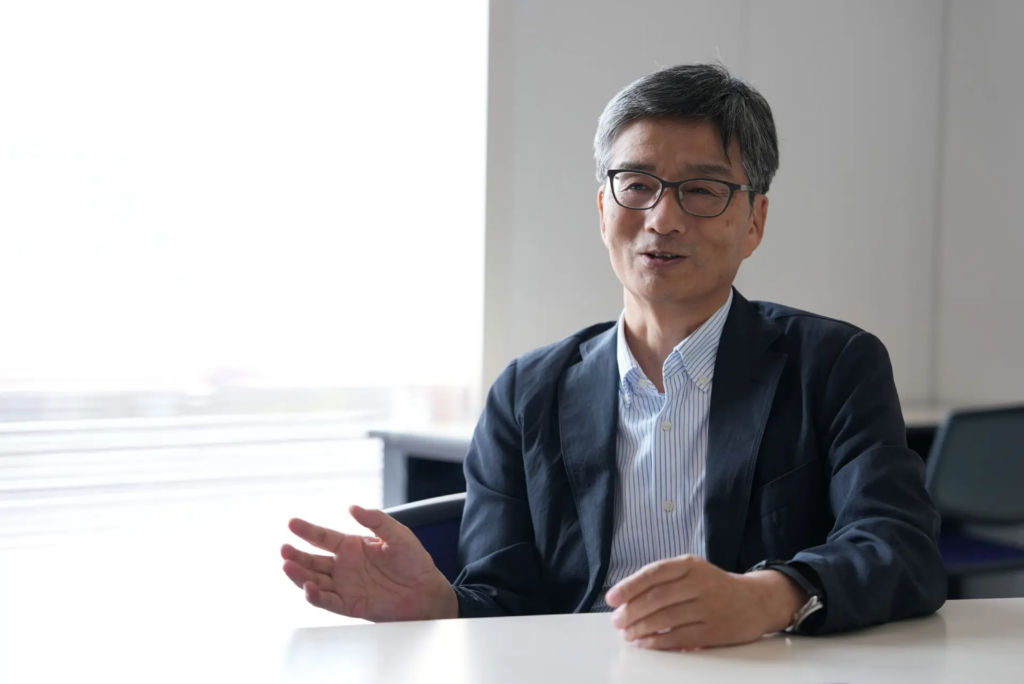
Professor Takaaki Fujita, Department of Applied Energy, Graduate School of Engineering, Nagoya University is a leading expert in tokamak plasma design. He spearheaded research and development on JT-60U, the predecessor of the world’s largest superconducting tokamak plasma experimental device, JT-60SA. His work achieved a world-class milestone with an effective energy gain factor of Q > 1 and guided the plasma design for JT-60SA.
For the FAST project, Professor Fujita leverages the experience he has cultivated through his lifelong pursuit of fusion research since his student days. He leads the Plasma Design Working Group and drives the engineering design forward.
We spoke with Professor Fujita about his involvement in fusion research over the years and his aspirations for FAST, an industry-academia collaborative project aiming to demonstrate power generation in the 2030s.
Q: Professor Fujita, you have an impressive background leading the design of JT-60SA, the world’s largest tokamak device. How did you first become involved in fusion research?
My first encounter with fusion research was during my student years. I worked in the laboratories of Professors Taijiro Uchida and Nobuyuki Inoue at the University of Tokyo, conducting plasma experiments on small tokamak devices such as TORIUT-6 and a reversed-field pinch device REPUTE-1.
After completing my doctoral program, I spent a year as a research fellow participating in experiments on the JFT-2M tokamak at the Japan Atomic Energy Research Institute. Later, I joined Kyushu University’s Research Institute for Applied Mechanics as a research associate, where I was responsible for plasma diagnostics on the superconducting high-field tokamak TRIAM-1M.
I then returned to the Japan Atomic Energy Research Institute (which later became the Japan Atomic Energy Agency and is now the National Institutes for Quantum Science and Technology), where I spent 20 years conducting plasma experiments on the large tokamak JT-60U and working on design studies for its successor, JT-60SA.
Currently, at Nagoya University’s Graduate School of Engineering, I have taught undergraduate and graduate students while conducting plasma experiments using the small tokamak TOKASTAR-2 and performing numerical simulations of plasma behavior. Looking back, I realize that my research has consistently focused on tokamak-related topics, from plasma experiments and numerical modeling to device design, ever since my student days.
Q: You have been engaged in tokamak-related research for many years. Could you tell us about your research achievements?
While working at what is now the National Institutes for Quantum Science and Technology (QST), I was responsible for developing diagnostic instruments to measure magnetic fields inside the JT-60U plasma and determine the plasma current distribution. This led me to spearhead the development of a plasma configuration with a unique current profile known as reversed magnetic shear plasma. In this state, the twist of magnetic field lines becomes weaker at the plasma center compared to the usual configuration, which requires delicate adjustments to maintain stability. However, it offers exceptionally high confinement performance. By leveraging this feature, we achieved an effective energy gain factor of Q > 1.
Related to this, I also studied the characteristics of extremely strong internal transport barriers (insulation layers), that appear in reversed magnetic shear plasmas, as well as the so-called current hole state, an extreme case of reversed shear where no current flows at the plasma center.
Later, in the design of JT-60SA, I shared responsibility for managing design activities and worked on controlling the plasma cross-sectional shape, creating operational scenarios, and reviewing specifications for plasma heating systems. Being involved in the design of JT-60SA, which remains the world’s largest tokamak and a joint Japan-Europe project, was truly a highlight of my career as a researcher.
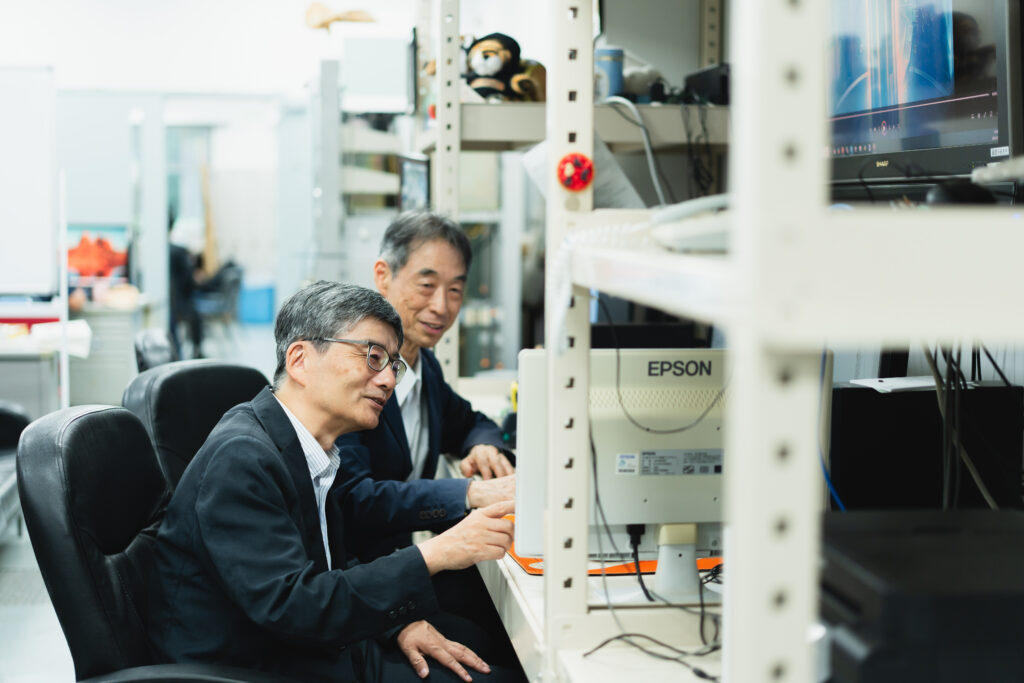
After moving to Nagoya University, I have been conducting experiments using a small tokamak device to study vertical position stabilization by applying a localized helical magnetic field, developing simulation codes for tokamak plasmas, analyzing tungsten impurity transport in JT-60U experiments using these codes, and working on conceptual design studies for fusion neutron sources.
Q: You are conducting research at Nagoya University, but how did you come to join the FAST project?
I was involved as a member in a proposal for the Cabinet Office’s Moonshot Research and Development Program, specifically Goal 10, which focuses on the multifaceted utilization of fusion energy. The proposal aimed to develop a fusion neutron source using a spherical tokamak. Unfortunately, the proposal was not accepted, but the studies conducted for that proposal became the foundation for launching the FAST project, which also includes the participation of private companies.
FAST is an extremely attractive project that aims for the early realization of sustained fusion power output over long durations. Moreover, it is a new initiative based on industry-academia collaboration, which I felt would allow me to play an active and independent role. That is why I decided to join the project.
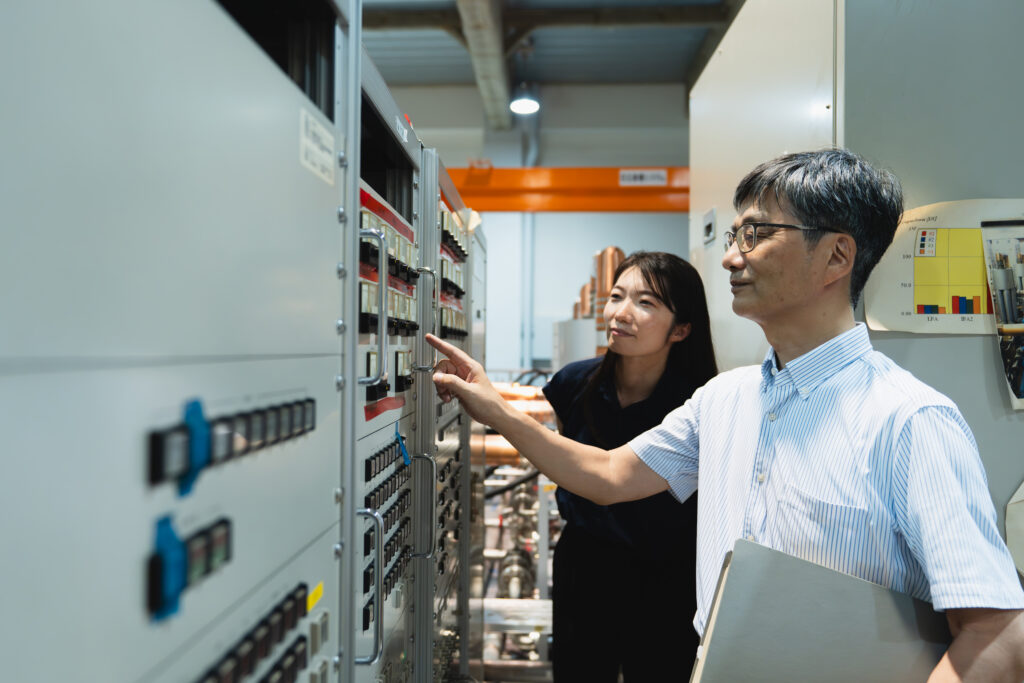
Q: As a member of the FAST project, what specific initiatives are you working on?
The FAST project has several working groups (WGs), and I am responsible for coordinating the Plasma Design WG.
Currently, FAST has completed the conceptual design phase, which determines the overall size of the device and its key parameters. In the Plasma Design WG, we examine whether the assumed plasma size and plasma current can achieve the target performance—such as 50 MW of fusion power and a plasma current sustainment time of 1,000 seconds—or what specifications for heating systems and other components would be required to meet these goals from the perspective of plasma physics.
We also discuss aspects such as the plasma cross-sectional shape to ensure consistency with surrounding equipment and magnetic coils, working closely with members responsible for those components as we advance the design studies.
Q: Finally, please share your thoughts on the FAST project and your determination toward demonstrating power generation in the 2030s.
Since my university days, I have devoted myself to fusion energy research as my life’s work. In reality, its realization has been slower than I imagined back then. That is why I feel a sense of excitement at the possibility of demonstrating power generation using fusion energy within the next decade or so, and doing so here in Japan.
The FAST device is roughly the same size as JT-60SA, a machine whose design activities I was deeply involved in. This means there are many areas where I can apply my experience, such as identifying what aspects need to be examined going forward. I intend to make full use of the expertise I have accumulated over many years in fusion development to help bring the FAST project to fruition and contribute to its ultimate success.