
Introduction
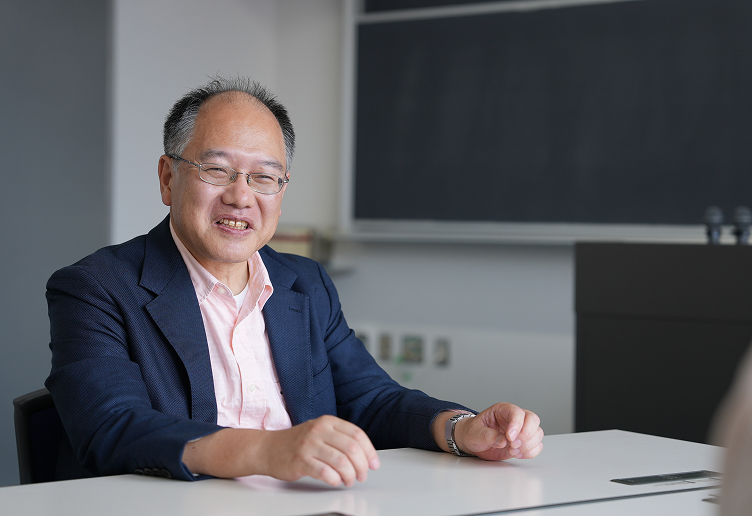
Professor Akira Ejiri of the Graduate School of Frontier Sciences at the University of Tokyo has been at the forefront of fusion energy research since his student days. With decades of experience, he remains a driving force in the field, both in the lab and in building bridges across disciplines and sectors.
In April 2025, he launched the Fusion Energy Interdisciplinary Research Center at the University of Tokyo, where he now serves as Director. The center promotes a broad spectrum of research and system development efforts, ranging from fundamental fusion science to real-world implementation, working closely with academic, industrial, and international partners.
In addition to his research, Professor Ejiri also heads the Fusion System Design Engineering program, an industry-academia initiative sponsored by eight private companies. As the program’s faculty advisor, he is helping to shape the academic and technological frameworks for fusion energy while nurturing the next generation of researchers and engineers.
We sat down with Professor Ejiri to hear about his journey in fusion research, the importance of collaboration between universities and industry, and his vision for the FAST project—a bold initiative aiming to demonstrate fusion power generation in the 2030s.
Q: Professor Ejiri, as a leading expert in plasma research, could you tell us about the research you have conducted so far?
My journey into fusion research began when I was a student at the University of Tokyo, where I was part of the Miyamoto–Toyama Laboratory. I started by studying reversed field pinch plasmas, which are similar in configuration to tokamaks. That experience sparked my interest in fusion and laid the foundation for what has become a lifelong pursuit.
Since then, I’ve primarily focused on plasma diagnostics, and over the years, I’ve had the opportunity to work with many different types of plasmas.
I began my professional career at the National Institute for Fusion Science (NIFS), where I worked with Professor Kazuo Kawahata on developing diagnostic systems for the Large Helical Device (LHD), which was under construction at the time. In parallel, I was also involved in experiments on the JIPP T-IIU tokamak and the CHS helical device, gaining valuable hands-on experience through collaborative research.
After the LHD achieved its first plasma, I returned to the University of Tokyo and joined the experimental team working on the TST-M spherical tokamak. Later, I collaborated with Professor Yuichi Takase to design and build its successor, the TST-2 spherical tokamak, which continues to serve as a key platform for our research today.
Thanks to my long-standing work in plasma diagnostics, I’ve also been involved in the design of JA DEMO, Japan’s conceptual fusion demonstration reactor, and contributed to experiments on the QUEST spherical tokamak at Kyushu University.
Q: You’ve been involved in experiments on many of Japan’s leading fusion devices. What are some of the key achievements you’ve made in your research?
One of my most notable achievements in plasma diagnostics was the construction and operation of a far-infrared laser interferometer for plasma experiments on the Large Helical Device (LHD), which, at the time, achieved world-leading performance. Over the years, I’ve also developed and demonstrated several advanced diagnostic techniques, including X-mode microwave interferometry, double-pass and multi-pass Thomson scattering, and a four-beam visible light correlation method.
A particularly meaningful area of my work has been in microwave reflectometry. I developed a theoretical framework to define optimal measurement conditions, including wave positioning and incident angles. Through a series of experimental studies, I was able to identify and address the causes of signal shifts or fluctuations—issues that had previously been poorly understood.
My research continues to explore new frontiers in diagnostics. On the TST-2 spherical tokamak, I’ve conducted both experimental and theoretical research connected to current drive techniques—methods for driving current in the plasma. One key challenge in spherical tokamaks is maintaining the plasma shape without a central solenoid. While many systems rely on electron cyclotron waves, our team was the first in the world to demonstrate that high-harmonic fast waves and lower hybrid waves can also be used effectively to generate spherical tokamak configurations.
To support this work, I also developed three new plasma equilibrium models that incorporate the effects of fast electrons: truncated equilibrium, three-fluid equilibrium, and hybrid equilibrium. These models offer new perspectives on understanding plasma behavior in advanced confinement systems.
Q: As a plasma diagnostics expert, your role in the FAST project seems indispensable. How did you come to be involved in FAST?
The origins of the FAST project trace back to an earlier initiative called ST2035, which was proposed as part of Japan’s Moonshot R&D Program. The idea was to develop a compact spherical tokamak test facility capable of deuterium-tritium (DT) operation by 2035. Initially, the concept focused on deuterium-deuterium (DD) operation, but it was later upgraded to DT, incorporating a neutron source.
I led the ST2035 proposal and submitted it to the Moonshot program. Although it wasn’t selected for funding, the concept itself was solid and aligned with the broader goal of accelerating fusion energy development. Thanks to that foundation, the project was restructured and relaunched as FAST, with Kyoto Fusioneering stepping in to lead the effort.
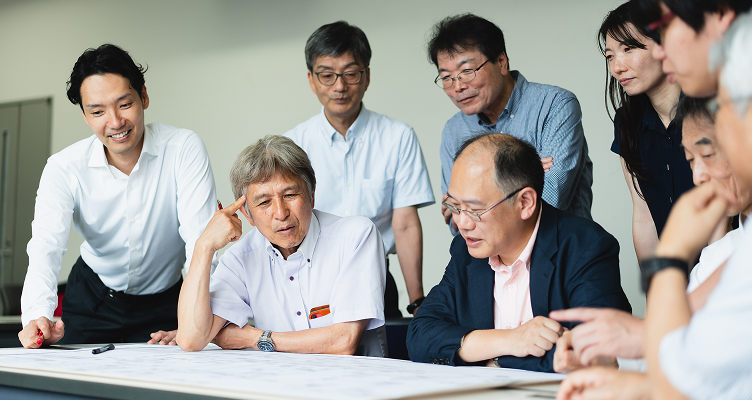
Since I was chairing the ST collaboration group at the time, I was naturally involved from the beginning. In a sense, I was “swept into” the FAST project as it evolved from ST2035, but in the best way possible. It’s been incredibly rewarding to work alongside so many talented researchers and industry partners, and I feel a deep sense of purpose in contributing to a project that aims to move fusion energy closer to reality.
Q: What kind of work are you currently involved in within the FAST project?
I’m part of the plasma design team, where I focus on plasma diagnostics and also contribute to the broader conceptual design of the device from a systems-level perspective.
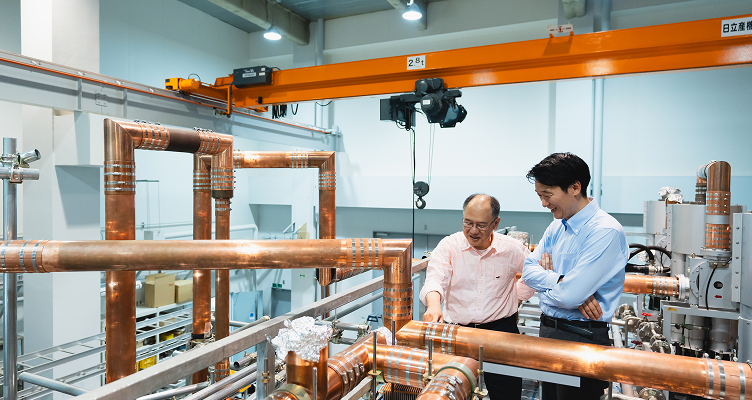
When designing diagnostics for FAST, we draw on lessons from both ITER and JA DEMO. ITER, as an experimental reactor, features an extensive array of diagnostic systems designed to collect a wide range of data. JA DEMO, on the other hand, is aimed at power generation and tritium breeding, and therefore requires a more minimal set of diagnostics—making the two quite different in scope and purpose.
FAST sits somewhere between these two extremes. While the early conceptual design is relatively straightforward, the detailed design and fabrication of diagnostic systems will present both technical challenges and exciting opportunities. It’s precisely in this “in-between” space—neither purely experimental nor fully demonstrational—where new and innovative ideas can emerge.
Taking a macroscopic perspective is essential. FAST represents a unique step toward making fusion energy a reality, and contributing to its design offers the chance to explore uncharted territory in fusion systems development.
Q: Could you share your thoughts on the FAST project and your aspirations for demonstrating fusion power generation in the 2030s?
Traditionally, academic researchers like myself have focused on fundamental scientific inquiry, while private companies have approached fusion from the perspectives of engineering and manufacturing. In a positive sense, we’ve made substantial progress by solving one core challenge at a time. But in hindsight, we may have overlooked the bigger picture—the ultimate goal of making fusion energy a part of society.
Today, thanks to decades of academic progress and remarkable advances in industrial technology, the idea of demonstrating fusion-based power generation no longer feels like a distant dream. It’s becoming a real, achievable target. That’s why I believe it’s so important for researchers and private-sector partners to align around this shared goal. Moving from a mindset of separation to one of collaboration will be key to accelerating both the industrialization and social implementation of fusion energy.
For researchers, the idea that we might see fusion power become a reality within our own careers is incredibly exciting. That’s my honest feeling. I hope the private-sector partners involved in FAST share that same excitement—and that we can move forward together toward this transformative goal.