
Starlight Engine Ltd. (SLE) announces a new executive leadership structure effective April 1, 2026. Under the new structure, Kiyotaka Kikuchi, who previously served as an Executive Vice President at Mitsubishi Corporation, will assume the position of President and CEO. Shuhei Azuma, who served two terms as Mayor of Shijonawate City in Osaka Prefecture, will be appointed Executive Vice President and CSO. With a leadership team comprising individuals experienced in project execution, strategic planning, technology integration, and industry–government–academia collaboration, SLE will accelerate efforts toward the deployment of fusion energy.
1. New Executive Leadership Structure (Effective April 1, 2026)
| Name | New Position |
| Kiyotaka Kikuchi | President and Chief Executive Officer (CEO) |
| Shuhei Azuma | Executive Vice President and Chief Strategy Officer (CSO) |
| Yuto Yoshioka | Senior Vice President and Chief Operating Officer (COO) |
| Kenzo Ibano | Senior Vice President and Chief Technology Officer (CTO) |
2. Overview and Rationale for New Executive Leadership Structure
Fusion energy has the potential not only to serve as a next-generation power source, but also to become a foundational industry that contributes to Japan’s energy security, promotes Green Transformation (GX) initiatives, and strengthens industrial competitiveness. It is recognized as a strategic sector under the government’s “Crisis Management Investment” and “Growth Investment” policies.¹ In addition, the Fusion Energy Working Group under the Council for Japan’s Growth Strategy has indicated that public–private investments on the order of trillions of yen may be required.² Fusion energy is increasingly regarded as a core component of national strategy.
Furthermore, Japan’s Ministry of Economy, Trade and Industry (METI) has established a Fusion Energy Office within the Agency for Natural Resources and Energy and has allocated 60 billion yen over three years in the FY2025 supplementary budget to support R&D by startups aiming for fusion power demonstration in the 2030s.*³
In response to these national initiatives, Starlight Engine announced the conceptual design of its fusion energy power‑generation demonstration project “FAST” at the end of last year, and is currently advancing engineering design and construction preparations. Through these efforts, the company aims to achieve an integrated demonstration of fusion power generation in the 2030s and the subsequent realization of commercial plants.
As the company marks its first anniversary, the need to accelerate business development and technology advancement has led to a significant strengthening of the executive leadership structure.
The new President and CEO, Kiyotaka Kikuchi, has extensive experience overseeing large-scale global projects and previously served as Senior Executive Vice President and Chief Region Officer (CRO) for the Asia–Pacific region at Mitsubishi Corporation. Supporting him will be Executive Vice President and CSO Shuhei Azuma, who brings expertise in strategic and policy development from his career at the Ministry of Foreign Affairs, a consulting firm, and eight years as Mayor of Shijonawate City in Osaka Prefecture.
Additionally, Yuto Yoshioka—who contributed to the growth of gyrotron system sales as Head of Business at Kyoto Fusioneering—will assume the role of COO, while Kenzo Ibano—with more than 15 years of experience in fusion research and prior service as an assistant professor at Osaka University—will serve as CTO.
Under the new executive leadership structure, Starlight Engine will accelerate progress on the FAST project as its executing entity and pursue the demonstration of fusion power and the deployment of commercial fusion plants.
The company will build a cross-sectoral framework involving heavy industry manufacturers, electric utilities, plant engineering firms, component suppliers, construction and real estate companies, financial institutions, and investors, as well as universities and research institutes with which multiple joint R&D initiatives are already underway, regulatory authorities and government agencies, and local governments interested in hosting facilities—establishing an integrated industry–government–academia structure.
As a core company supporting the transition from “fusion research” to a full-fledged “fusion industry,” Starlight Engine seeks to lead the creation of a Japan-originated fusion energy industry.
Starlight Engine will advance the following initiatives:
- Expansion of collaboration with industry and development of a fusion energy supply chain
- Establishment of a business model for future commercial plants
- Advancement of public–private partnership schemes
- Strengthening of international collaboration for global deployment
- Deepened partnerships with academia and national research institutes
References (in Japanese)
*1: Japan Growth Strategy Headquarters (1st Meeting), “Issues for Consideration in the Growth Strategy”
https://www.cas.go.jp/jp/seisaku/nipponseichosenryaku/honbu/dai1/kentoujikou_set.pdf
*2: 1st Fusion Energy Working Group
https://www8.cao.go.jp/cstp/fusion/fusion_wg/1kai/1kai.html
*3: METI Initiatives Toward Realizing Fusion Energy
https://www8.cao.go.jp/cstp/fusion/fusion_wg/1kai/siryou2-3.pdf
3. About the FAST Project
The FAST (Fusion by Advanced Superconducting Tokamak) Project will demonstrate full plant integration and fusion-based power production. Key objectives include:
- Sustained D-T Plasma Burn: Generating, maintaining, and controlling deuterium-tritium plasmas—the fundamental step toward harnessing fusion reactions.
- Energy Extraction and Conversion: Demonstrating methods for converting fusion heat into electricity and hydrogen production, bridging the gap between experimental reactors and commercial fusion power plants.
- Tritium Fuel Cycle Development: Integrating technologies for breeding and recycling tritium, enabling a closed fusion fuel cycle.
- Full System Integration: Developing and integrating all functional fusion power plant systems, demonstrating safe and sustainable operations, and providing a basis for commercial fusion power plants.
FAST adopts a tokamak configuration because it benefits from extensive research, established experimental data, and a relatively mature workforce and supply chain. This approach provides the fastest and lowest-risk route—both technically and financially—toward achieving the project’s ambitious objectives.
While FAST targets the demonstration of fusion energy utilization, it is important to note that the term “power generation” refers specifically to utilizing energy produced from fusion reactions rather than achieving net-positive electricity output.
4. Biographies of the New Executive Leadership Team
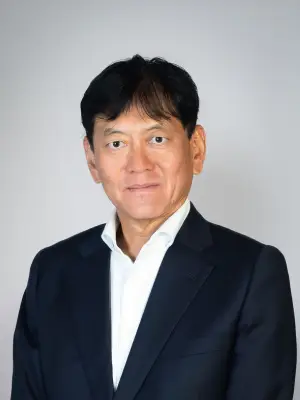
Kiyotaka Kikuchi
President and Chief Executive Officer (CEO)
Kiyotaka spent more than 30 years at Mitsubishi Corporation, leading business investments, PMI, business revitalization, and global management. As an Executive Vice President, he served as CEO of the Consumer Industry Group and as Regional CEO for Asia and Oceania, overseeing operations across 19 countries and 42 offices.
He drove consolidated management across the entire value chain—from upstream to downstream—enhancing corporate value through capital restructuring and spearheading new business development initiatives.
President Kikuchi’s message is available on our website.
https://sle.energy/en/our-team/
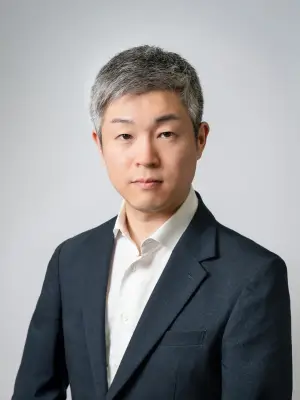
Shuhei Azuma
Executive Vice President and Chief Strategy Officer (CSO)
Shuhei began his career working on multilateral economic partnership negotiations at Japan’s Ministry of Foreign Affairs, and later engaged in global strategy development at the Indian subsidiary of a Japanese management consulting firm. In 2017, he became Japan’s youngest mayor when elected Mayor of Shijonawate City in Osaka Prefecture, where he led municipal reform over two terms spanning eight years. He earned a master’s degree in Nuclear Engineering from Kyoto University, where he conducted research on particle simulation of tokamak plasmas.
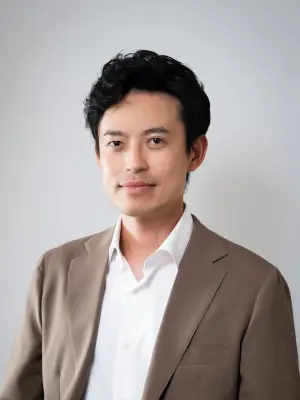
Yuto Yoshioka
Senior Vice President and Chief Operating Officer (COO)
At his previous trading company, Yuto worked in Jakarta for the development of a natural gas project. He later expanded the business as a trader in Singapore. He joined Kyoto Fusioneering in November 2021, where he is advancing the global business, sales pipelines, and stakeholder management as VP of Business Development and Operations. He graduated from the Faculty of Economics at Kyoto University.
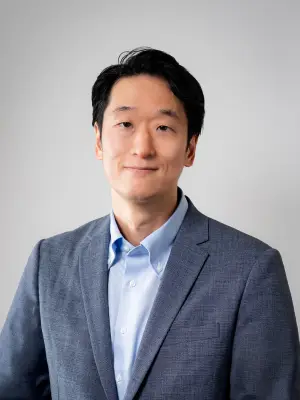
Kenzo Ibano
Senior Vice President and Chief Technology Officer (CTO)
Dr. Ibano has collaborated with U.S. universities and research institutions for more than 15 years on fusion reactor design and plasma–material interaction, scientifically validating the feasibility of commercial fusion reactors. Drawing on this experience, he supports startups as a VSM Mentor at OIST. He holds degrees from Keio University, an M.S. from the University of Illinois, and a Ph.D. from Kyoto University.
5. About Starlight Engine Ltd.
Starlight Engine was established in April 2025 as the central executing entity for FAST—Japan’s private‑sector‑led, industry–academia collaboration project aiming to demonstrate fusion power generation in the 2030s. In addition to overseeing the FAST project as a whole, the company drives a wide range of initiatives, including technology and business development toward future commercial plants, fundraising, site selection, and the construction of a robust supply chain.
Guided by the conviction that “we will realize fusion energy,” Starlight Engine is committed to contributing to the creation of a future cornerstone industry while advancing in step with Japan’s national strategy.
Company Name: Starlight Engine Ltd.
Headquarters: Distribution A Building, AW1-S, Tokyo Ryutsu Center 6-1-1 Heiwajima, Ota-ku, Tokyo 143-0006, Japan
Representative: Kiyotaka Kikuchi, President and CEO
Business activities: Research, development, and commercialization of fusion energy plants
Website: https://sle.energy/