Dr. Takanori Shibata, Assistant Professor at the High Energy Accelerator Research Organization (KEK), brings extensive experience and significant accomplishments in accelerator science and materials science. He is leading the development of the Neutral Beam Injection (NBI) system—an essential heating system for the FAST facility. Throughout his research career, beginning in his student days, he has strongly felt that Japan must unite its full capabilities to pursue the national mission of demonstrating power generation using fusion energy. Carrying this conviction with him, he is taking on unprecedented challenges together with the team at the FAST Project.
We spoke to Dr. Shibata about the fusion research he has been involved in so far, as well as his motivations and aspirations for the industry‑academia collaboration project “FAST,” which aims to demonstrate fusion power generation in the 2030s.
Q. Could you tell us about the fields you have worked in and your path as a researcher?
As a student, I conducted research on plasma simulations in the divertor region of fusion devices. At the time, opportunities for large‑scale fusion plasma experiments were limited, and numerical simulations for large devices faced significant computational constraints.
Because of this, I shifted my focus toward plasma simulations inside ion sources, where plasma parameters are similar to divertor‑region fusion plasmas (plasma temperatures of tens of thousands of degrees Celsius and particle densities of 10¹⁹ per m³), and where the demand for experimental studies was high. Ion sources generate plasma internally and extract ions of interest as beams through electrostatic acceleration. Since the internal plasma behavior had not yet been sufficiently understood, there was strong demand for detailed simulations.
After conducting research at the National Institutes for Quantum Science and Technology (QST; formerly JAEA) and later at CERN, I joined my current institution, KEK.
At KEK, R&D is conducted on accelerators that support particle physics experiments as well as materials and life‑science experiments. For roughly the past 15 years, I have been involved in developing RF ion sources for the high‑intensity proton accelerator facility J‑PARC, as well as electron‑cyclotron‑resonance (ECR) ion sources for medical accelerators.
At JPARC, we achieved a series of worldclass performance records, including an ion beam current density exceeding 1500 A/m², continuous ionsource operation sustained for 6.8 months, and beamcurrent fluctuations kept below 0.5%. These results have positioned the facility’s ion sources among the most advanced in the world for proton accelerators.
Q. What kind of research have you been involved in within the field of fusion energy?
In the fusion‑energy field, I belonged to the NBI development group at JAEA (now QST Naka Fusion Institute), working on the large tokamak JT‑60 and the ITER project.
Large ion sources for NBI extract ion beams across apertures over 1 meter in length. However, because beam intensity was not uniform across the extraction area, localized concentration of the beam caused excessive heating in certain regions of the device. Through detailed simulations tracking electron behavior inside the plasma, we identified magnetic drift as the primary cause of this phenomenon. By redesigning the magnetic‑field configuration inside the ion source based on this finding, we significantly improved beam uniformity. This work was recognized with the JT‑60 Collaborative Research Award (FY 2015).
※ Award details: https://www.qst.go.jp/uploaded/attachment/4862.pdf
In 2019, I joined a joint project with NIFS to develop a new type of NBI using RF ion sources. In Japan, filament‑driven arc‑discharge ion sources had long been the standard, but the short lifetime of filaments posed a major challenge. RF ion sources, with their long operational lifetimes, emerged as a promising alternative. Because of my experience developing RF ion sources in the accelerator field, I was invited to participate, and since 2023 I have been involved in testing large RF ion sources as a cross‑appointed researcher.
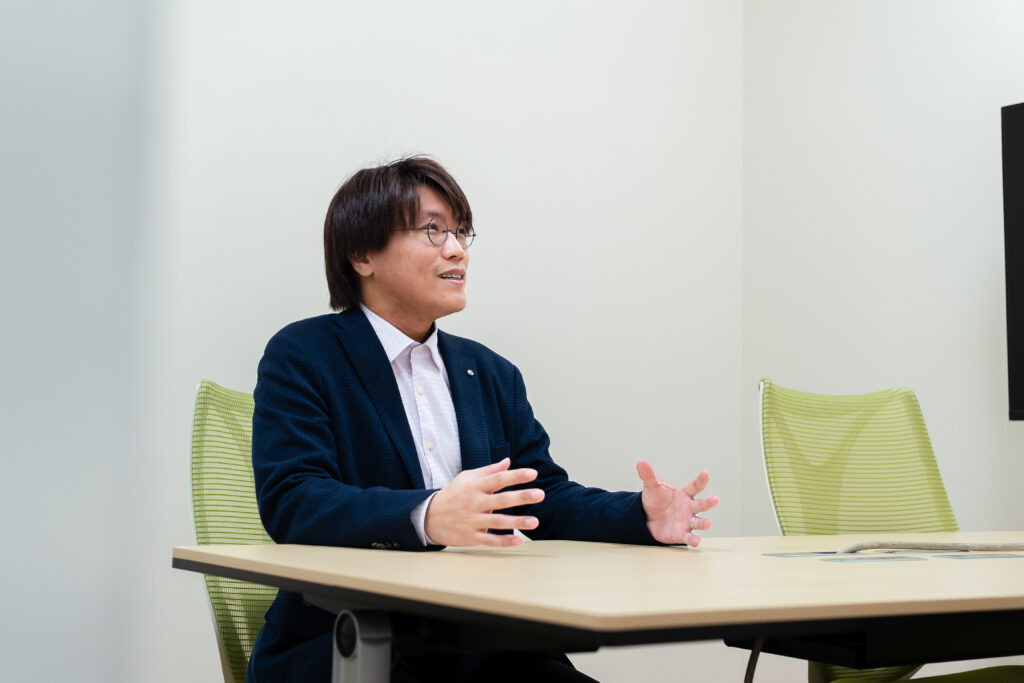
Q. How did you come to participate in the FAST Project?
For about 30 years, researchers specializing in ion sources—particularly negative ion sources, which are difficult to produce—have gathered annually for the “Negative Ion Workshop.” I took over as chair in FY2025. However, the number of ion‑source researchers in Japan has been declining in recent years. For that reason, we expanded the workshop to include all domestic researchers and engineers involved with ion beams, regardless of type, application, or institutional affiliation.
Around the time I was searching for ways to broaden the ion‑source community, Assistant Professor Ibano of Osaka University and Dr. Miki Nishimura of Kyoto Fusioneering introduced me to the FAST Project, where strong demand exists for NBI development. Given the scarcity of active Japanese researchers who can handle NBI ion sources, and recognizing that FAST represents a culmination of Japan’s fusion‑technology development, I felt that my expertise from the accelerator field could contribute meaningfully. This led me to join the project.
Q. What role do you currently assume in FAST?
In FAST, I am responsible for developing the negative‑ion‑based neutral beam injection system (NNBI), which uses deuterium negative ions (D⁻) to drive current in the fusion plasma. I serve as the coordinator of the team tasked with producing an NNBI system that meets FAST’s performance requirements ahead of operations, taking on the challenge of realizing an unprecedented high‑power NNBI system. FAST sets a target of 11 MW per unit, 33 MW total for three units—a level of NBI power that does not yet exist anywhere in the world. This requires the development of a new, high‑power ion‑source system. Moreover, with the 2030s demonstration timeline, and with each NNBI unit requiring more than a year to build—over three years for all three units—there is limited time for R&D.
To meet both the demands of upgrading NNBI and completing fabrication in time for the 2030s demonstration, we are applying existing knowledge where possible while coordinating specifications and schedules with major manufacturers. In parallel, we are leveraging researcher networks to engage domestic institutions and companies in new ion‑source R&D—pursuing a multi‑layered approach.
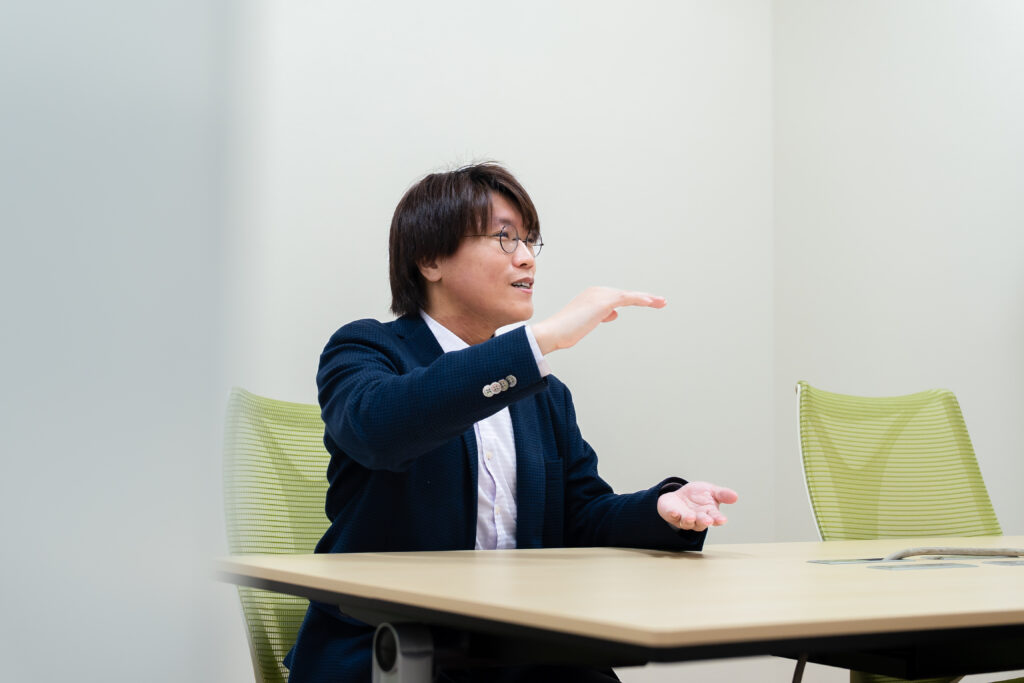
Q. Finally, could you share your aspirations for the fusion power demonstration planned for the 2030s?
From my student days, researchers in the fusion field repeatedly emphasized: “Japan is a nation with scarce natural resources, and this will eventually have severe consequences. That is why fusion research must never come to a halt.”
Today, global competition for energy resources is intensifying, and prices continue to rise. Considering this reality, I strongly believe that demonstrating fusion‑energy‑based power generation is a national mission requiring the full commitment of Japan’s researchers and engineers.
Although I come from fields distinct from fusion—accelerator science and materials science—I believe this background allows me to bring fresh perspectives. By integrating cross‑disciplinary knowledge such as charged‑particle control technologies and advanced materials, I hope to contribute breakthrough innovations that build upon, and extend, the path paved by pioneers in the fusion field.