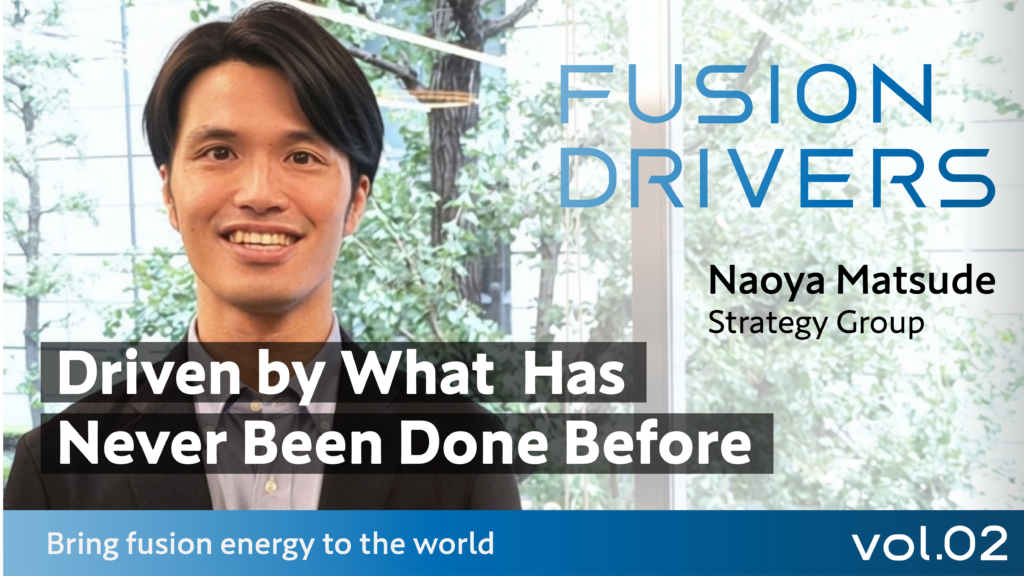
Fusion Drivers Vol.2
Mr. Naoya Matsude, Strategy Group
Fusion Drivers – Bring fusion energy to the world – is an interview series featuring the team members who work at Starlight Engine. In this edition, we spotlight Naoya Matsude, who leads site selection efforts for the FAST project.
We sat down with Mr. Matsude to discuss the experiences that shaped his career, what drew him to fusion energy, and why he believes working alongside local communities is essential to building the future.
Finding Inspiration in Fusion Energy
Q. Could you tell us about your career before joining Starlight Engine?
During graduate school, my research focused on climate change adaptation, particularly how societies can respond to increasingly severe natural disasters caused by climate change. To be honest, I did not choose the field with a clear plan from the beginning. However, as I studied it further, I became increasingly aware of its social relevance and impact, and before long, I developed a strong interest in it.
At one point, I considered pursuing a Ph.D., but while exploring career opportunities, I had the chance to speak with people working in the renewable energy industry. Those conversations sparked a desire to move beyond research and see how ideas are implemented in the real world.
I eventually joined a renewable energy company involved in wind and solar power development, where I worked on onshore wind projects. When I joined, the company had fewer than 100 employees, but it grew to more than 300 during my time there. Being able to witness that period of rapid organizational growth firsthand was an invaluable experience.
One of the most memorable periods of my career was an assignment in Shimane Prefecture shortly after I joined the company. I was given responsibility for a local project almost entirely on my own, which was quite overwhelming at first. I had little idea where to begin, but I gradually learned through constant engagement with local stakeholders. I met with community members who supported the project, participated in public information sessions, spoke with elected officials, and engaged with people who held differing views. Day after day, I found myself having conversations with members of the local community.
It was certainly challenging, but the experience taught me how rewarding it can be to advance a project while building trust with local communities. That lesson continues to shape the way I work today.
Q. How did you first become interested in fusion energy?
I had been following developments in the energy sector for some time and had even researched the history of nuclear energy on my own. At the time, however, I viewed fusion energy as something that might eventually become a reality, but only in the distant future. I did not realize serious commercial efforts were already underway.
That changed when, through a friend from my university days, I had the opportunity to speak with an engineer working at Kyoto Fusioneering. For the first time, I met people who were actively working to make fusion energy a reality.
Afterward, I immersed myself in publicly available information, including government reports and online resources. That was when I learned more about both Kyoto Fusioneering and Starlight Engine. What stood out to me was the level of specificity in their plans and the seriousness with which they approached the challenge. I was particularly impressed not only by their technological ambitions but also by their commitment to building a viable business around fusion energy.
Q. What motivated you to enter the fusion industry and join Starlight Engine?
It may sound somewhat abstract, but what attracted me most was the sense of possibility that fusion energy represents.
The wind power projects I worked on in my previous role are incredibly important and make a meaningful contribution to society. At the same time, I believe fusion energy has the potential to create an even greater impact on humanity’s future. The challenge is extraordinarily difficult, and the road to commercialization is far from straightforward. Yet I was deeply inspired by the opportunity to contribute to something with such long-term significance.
As I mentioned earlier, the more I learned about Starlight Engine, the more I was impressed by the clarity of its vision and the strength of its strategic direction. That impression was reinforced throughout the interview process. In conversations with the leadership team, I saw an organization pursuing a clear destination while navigating territory where no one yet has all the answers. I found that incredibly compelling.
I was also inspired by conversations with our Executive Vice President, Shuhei Azuma, who oversees the Strategy Group. His unconventional career path challenged many of my own assumptions about professional growth. I had always tended to think in terms of building expertise step by step, but speaking with him made me realize there were entirely different possibilities for shaping a career. I felt that Starlight Engine would offer opportunities unlike any I had experienced before.
The uncertainty of working in both fusion energy and a startup environment may seem intimidating to some people, but for me, it is part of the appeal. Throughout my career, I have found greater satisfaction in creating something new than in simply operating within an established framework. Working through ambiguity and finding direction amid uncertainty can be difficult, but the sense of accomplishment makes it worthwhile.
Beyond Coordination: Building a Shared Vision for the Future
Q. What does your current role involve?
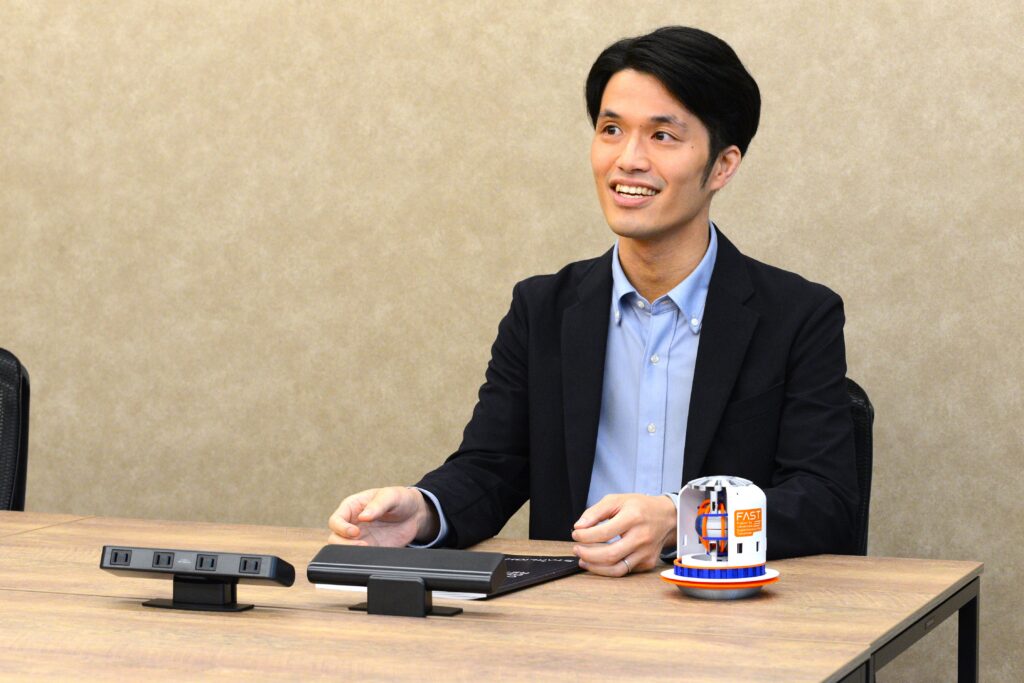
I am responsible for site-related activities across the FAST project. This includes coordinating with stakeholders, holding consultations, and communicating about topics such as safety and regional benefits. Much of my work involves engaging with local governments and other stakeholders as we advance the project together.
In July, we launched our site solicitation process, and we have been grateful for the level of interest we have received. In addition to one-on-one discussions, we have also held online information sessions to address questions and provide as much clarity as possible for interested communities.
There is certainly a great deal of coordination involved in the role, but I do not believe that is its essence.
To me, the real purpose of this work is to collaborate with local communities and governments in imagining what the future could look like. That is what makes the role both meaningful and rewarding. Whether discussing economic benefits, industrial development, or the long-term future of a region, I find great satisfaction in exploring what this project can mean for a community and helping shape that vision together.
Q. How would you describe the culture at Starlight Engine?
If I had to describe it in one word, I would say everyone is incredibly committed.
People genuinely want to move the project forward. There is a strong sense of ownership, and no one approaches challenges with the expectation that someone else will solve them.
Sometimes I joke that it feels a bit like a festival. Not because it is chaotic, but because everyone is working passionately toward the same goal.
One thing that surprised me was the speed of decision-making. At Starlight Engine, there is a close connection between employees and the leadership team, which allows important decisions to be made quickly. Shortly after I joined, for example, the decision was made to launch the site solicitation process. Working together with senior leadership, we were able to bring the initiative together in a relatively short period of time.
Of course, major decisions are not made lightly. They involve careful discussion and consideration. Even so, there is a strong sense throughout the organization that standing still is not an option. The fusion industry is evolving rapidly, and I believe our ability to move quickly is one of our greatest strengths.
Driven by What Has Never Been Done Before
Q. What do you hope to achieve through your work at Starlight Engine?
First and foremost, I want FAST to become a project that delivers a meaningful and positive impact on society.
Ideally, FAST will become a catalyst for many forms of value creation. I hope it will encourage more local governments to explore hosting future commercial fusion plants, support the growth of fusion as an export industry, and contribute to new employment opportunities and regional economic development.
To help make that happen, I intend to take full responsibility for the site development activities under my leadership. By engaging sincerely with local communities and governments, I hope to move the project forward steadily, one step at a time.
The work carries significant responsibility, but I genuinely enjoy it, and that enjoyment is a major source of motivation. I have always been curious by nature. I enjoy discovering new things, visiting places I have never been before, and meeting people with perspectives different from my own.
Being involved in the unprecedented challenge of bringing fusion energy into society satisfies that curiosity in a remarkable way. As we move forward, I hope to continue addressing challenges with sincerity while helping create value that benefits future generations.
Q. What would you say to people considering a career in fusion energy?
I believe fusion energy is a mission-driven industry with enormous significance.
At the same time, while tremendous progress is being made, nothing has been fully established yet. That is precisely what makes it so exciting. We have the opportunity to help build an entirely new industry from the ground up.
For people who want to be part of building the future rather than stepping into a finished world, I believe this is an incredibly attractive environment.
If fusion energy interests you, my advice would be simple: get involved as early as you can.
The path ahead will not always be easy, but I would welcome the opportunity to help shape the future together.